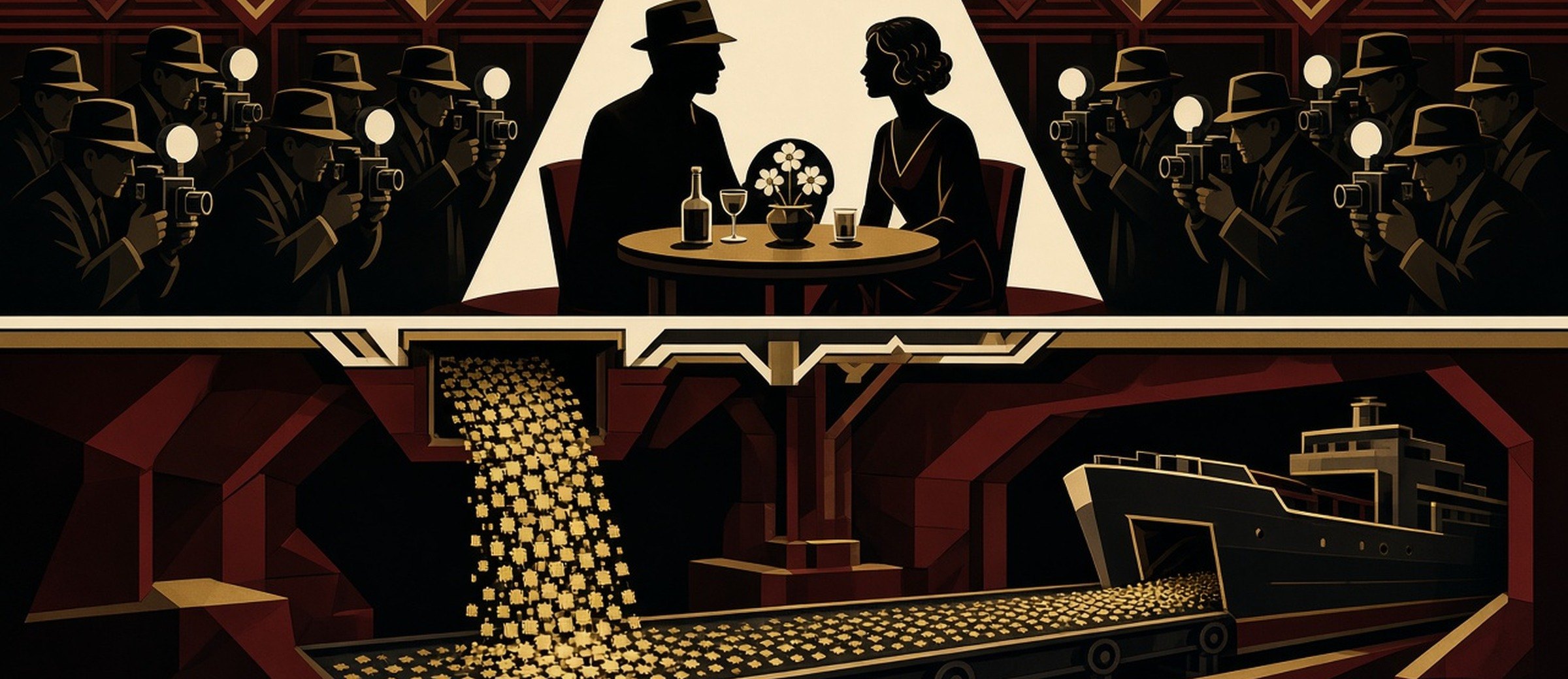
Over the weekend, Jensen Huang, the chief executive of Nvidia and one of the most powerful figures in the artificial intelligence boom, apologized to his wife and his company for a personal relationship with a business executive. Had the story ended there, it would have been an embarrassing but familiar tale of a corporate titan and his private life. It did not end there.
According to The New York Times, a memo that circulated among senior Trump administration officials last spring cited intelligence that the woman had been recruited by China's Ministry of State Security. Her assignment, the memo is said to have indicated, was to gather information about Mr. Huang and possibly to push Nvidia to make its most advanced chips available to China. She was an executive at Megaspeed, a company US authorities have been examining on suspicion that it helped Chinese firms get around American export controls. Trade records cited by The Times show that a Malaysian subsidiary of Megaspeed bought at least $4.8 billion of AI equipment containing Nvidia chips between June 2024 and February 2026, much of it through server makers.
Much remains unknown. The account rests on anonymous sources describing an intelligence memo, and no one has been charged. Nvidia's board has opened an independent investigation. The company says Mr. Huang's contact with the woman was not unusual, that customers receive no sensitive information, and that it has no reason to believe national security or its proprietary information was compromised. Megaspeed denies diverting chips, and the reporting has not shown that any specific shipment reached China. Beijing has dismissed the allegations as a smear.
Even so, the allegations are striking because of how closely they resemble what American officials have been warning about for years. In 2023, the leaders of the intelligence services of the United States, Britain, Canada, Australia and New Zealand appeared together on 60 Minutes to describe a Chinese campaign to steal technology on a scale they called unprecedented. The FBI said it had about 2,000 open investigations connected to the effort. One American wind turbine company, its technology stolen, watched its sales collapse and laid off nearly 700 workers.
The pressure has not stopped at the theft of secrets. Federal prosecutors say a Chinese intelligence operative hired a private investigator to dig up damaging information on a dissident running for Congress, and that the operative suggested violence would also be acceptable.
Nor has the harm been confined to politics and business. The Drug Enforcement Administration says the Mexican cartels that make fentanyl get their precursor chemicals mainly from China and India, and that Chinese networks help launder the cartels' profits. Roughly 34,000 Americans died from synthetic opioids in a recent 12-month period, and that is after a steep decline.
George Soros, the financier and philanthropist, warned about the larger danger at Davos in 2019, when he called Xi Jinping "the most dangerous opponent of open societies."
It would be wrong to say that all of this is a single plan run from a single office. Some of it the Chinese state appears to direct, and some of it, such as the chemical trade, it may simply tolerate. Taken one at a time, none of these episodes looks like an act of war. No shots have been fired and no ultimatum has been delivered, which is why it has been so easy for Americans to treat each one as a separate story.
Yet Americans are now having a loud and sincere argument about how to stay out of the next war. The instinct is a decent one. But it assumes that conflict is something that happens elsewhere, and that we alone will decide whether to join it. The record above suggests that the pressure has already arrived here, in our companies, our politics and our communities.
It can also arrive in a friendlier form. A country with a market as large as China's does not always need to threaten anyone. It can simply offer enormous sales, and leave American businesses and politicians to discover how much they are willing to overlook in order to keep them.
Republican lawmakers have asked Mr. Huang to testify on November 18. They might begin by asking who at Nvidia knew who was buying its chips, and when. The rest of us face a harder question: If a war had already begun without anyone declaring it, how would we know?
TwelveOneForty is owned by The Westphalian.